Asking (and Answering) Tough Questions about our Congregation
- Anthony G. Siegrist
 I’ve heard to the word ‘flourishing’ far too often in church conversations. And yet, I think the questions the word raises are essential. Is your congregation flourishing? On the surface this seems like a question that’s easy to answer. Some of us will instinctively think about the new people that have joined in the last year. Others will think of the people that decided to be baptized last fall or the sound of children in the sanctuary each week. Others will think about the budget, difficult discipleship-inspired decisions, or even the general vibe of the church community.
There no one-size-fits-all definition of what it means for a congregation to flourish...
Just as each of us bring something unique to our congregation, so each congregation contributes something unique to the larger body of Christ. The truth is there is no universal definition of what it means for a congregation to flourish. I recall someone in a role similar to mine reporting that congregations in that region were “each flourishing in their own way.” I like that way of putting it. Just as each of us bring something unique to our congregation, so each congregation contributes something unique to the larger body of Christ.
There no one-size-fits-all definition of what it means for a congregation to flourish, and yet it’s wise for our congregations to periodically ask the question. Are we flourishing?
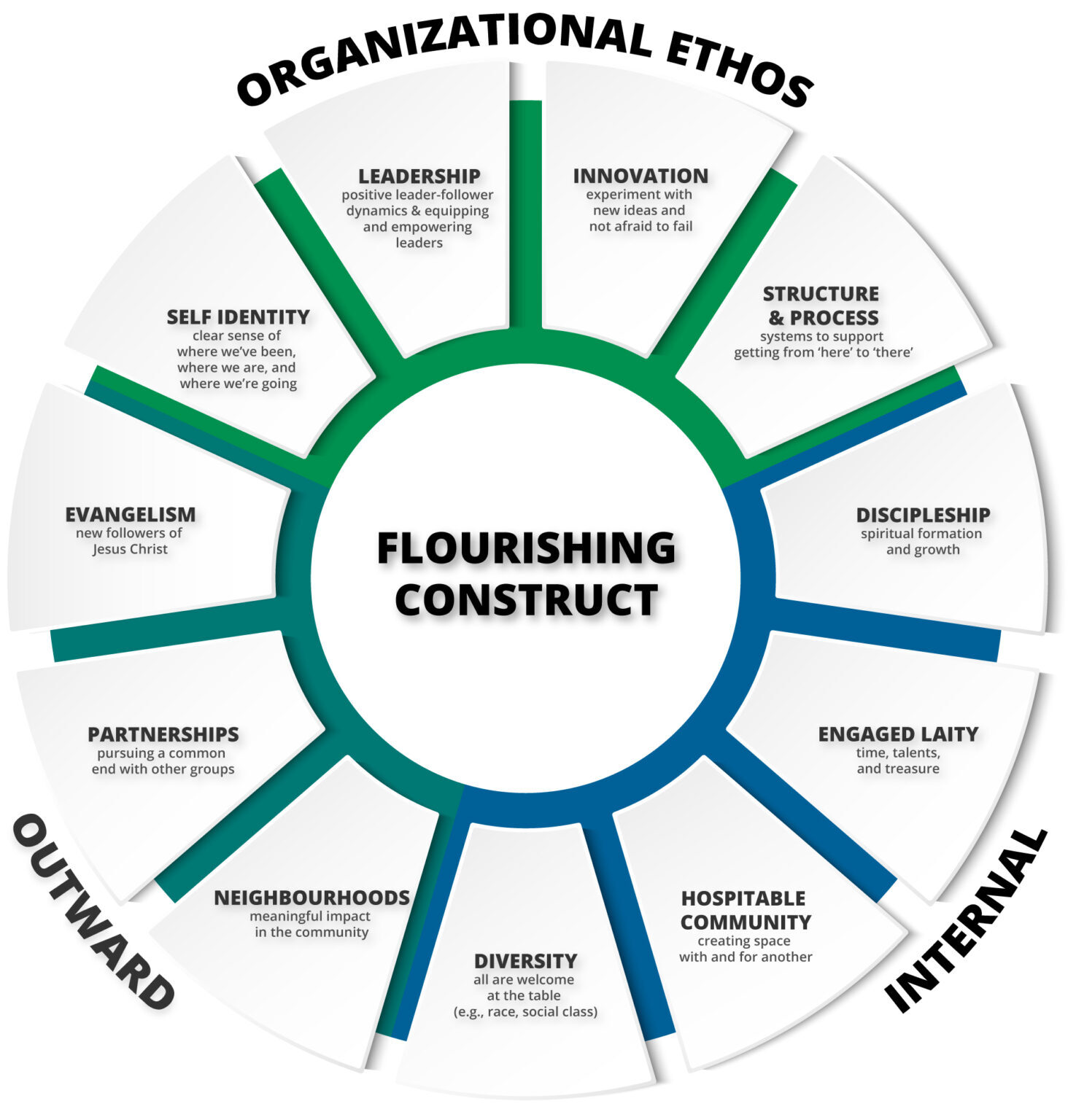
The Flourishing Congregations Institute, an ecumenical Canadian research centre, offers a helpful tool for these conversations. They suggest eleven categories that a congregation might use for self-assessment. No congregation will be hitting a home run in every category on the wheel, but the critical, self-assessment is essential.
What happens if this self-assessment shows that your congregation is not flourishing?
Well, one follow-up is simply to ask if the congregation really wants things to change. Often our congregations are producing the results at least some portion of the group wants. These results might not align with the vision statement on the website or what the pastor would say to an outsider, but they may well represent the true desires of many. We might say that we want our congregation to be serving young people or the wider community or those on the margins, but when it really comes down to making tough decisions there are other things we value more highly.
Let’s imagine that’s not the case though. And this is one of the things that makes life in Christian community exciting. Our congregations can respond and grow.
These are intentional choices to seek flourishing, even if the word itself has been overused.
At a recent gathering of church researchers, I heard the story of an Anglican church in Ontario that was tired of their downward slide. For this congregation, moving toward flourishing wasn’t about changing music styles or taking on some trendy initiative. The major thing they worked at was simply changing how they were perceived in the community. At one point the church was thought of as an elitist congregation that served its members and only engaged the wider community to raise funds for things the congregation wanted. This was something they could change. For example, they chose to keep the tradition of hosting a fish fry, but they made the hard choice to changing the fundraising beneficiary from an in-house project to a community initiative. They made part of their space open to community groups as a free meeting venue. They decided to turn part of the front lawn into a place where community members and local non-profits could post notices about their events and where dog walkers and bike riders could always find clean drinking water. The church changed their reputation by finding ways to be a benefit to the community beyond themselves.
Mennonite churches have made these kinds of choices too. I know of MCEC churches that have started initiatives to support the transient university students in their city or made changes to their worship patterns to genuinely include a wider breadth of worshippers. Other MCEC churches have chosen to spend huge amounts of time helping vulnerable immigrants or families at risk. And there’s more, as a result of critical, self-assessment some MCEC churches have made changes to their policies and committee structures and are experimenting with new ways of cultivating generosity. In the last month, I’ve noticed two congregations that have decided to work through the entire bible together in 2026. These are all examples of communities being open to new challenges, to remaining flexible and life-filled at the confluence of scripture, the Spirit’s guidance and a changing cultural context. These are intentional choices to seek flourishing, even if the word itself has been overused.
https://flourishingcongregations.org/
--------------------------------------------------------------------------------------------------
There no one-size-fits-all definition of what it means for a congregation to flourish, and yet it’s wise for our congregations to periodically ask the question. Are we flourishing?
The Flourishing Congregations Institute, an ecumenical Canadian research centre, offers this helpful tool for these conversations. They suggest eleven categories that a congregation might use for self-assessment. No congregation will be hitting a home run in every category on the wheel, but the critical, self-assessment is essential.
