Built together into a dwelling place for God
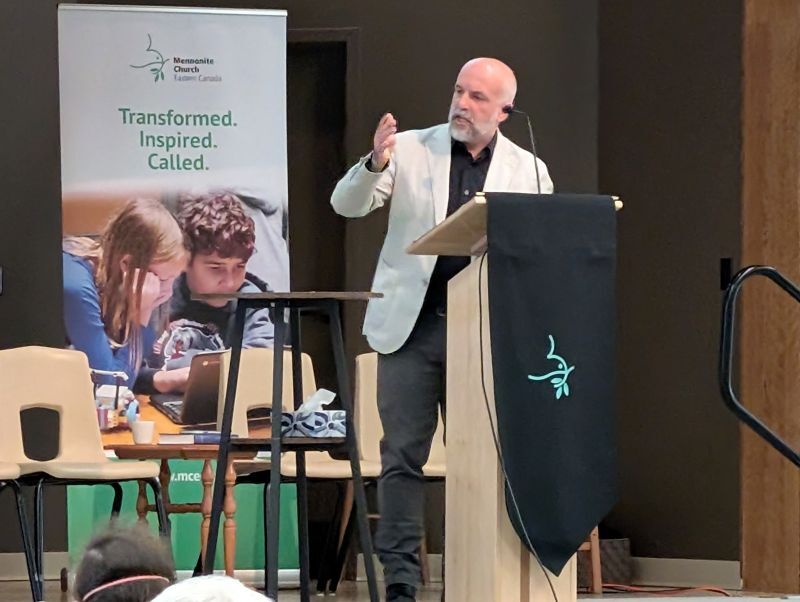
Anthony encourages those gathered at ACG 2026
How do we find our way? As individual people seeking to know a holy and mysterious God—How do we find our way?
As local congregations in a changing cultural context—How do we find our way?
As a church body, whose goal is to energize congregations in worship, discipleship and mission—How do we find our way?
As a regional church beginning to think and pray about our priorities for the next five years—How do we find our way?
Such questions are not foreign to the Bible. The psalmist, for instance, regularly asks for God for guidance or for light showing the way.
The way of God to which scripture witnesses is a deep current. We pay attention to it. We learn to read it.
Over the last few years, I’ve become increasingly interested in stories of people navigating the world’s oceans before modern technology, before not just global positioning systems and constant internet access, but also before clocks and telescopes and astrolabes.
What the ancient mariners did, was they learned to read. They learned to read the currents, the waves, the plant and animal life, the wind, the clouds and the stars. They passed this knowledge down from one generation to the next. It wasn’t a precise or efficient way to navigate, as we might think about it today, but it was trustworthy and effective.
Ancient Polynesians made their way across the vast expanse of south Pacific. Ancient Norse crossed the North Atlantic. Arabs long ago traversed the Indian Ocean. All without anything resembling modern tools.
This ancient form of wayfinding connected travelers with the ocean, the earth, plants and animals. Navigating this way connected them with their ancestors. Navigating this way allowed them to not only now where they were, but who they were, where they fit in the community of God’s creatures.
This ancient style of navigation is what we bring to our time together today. We are finding our way. It is also the style of our engagement with scripture. We look not for precision or for yet more information, but we look for guidance. With early Christians, we seek the way.
The way of God to which scripture witnesses is a deep current. We pay attention to it. We learn to read it. The experience of those disciples who traveled the way before is the testimony of our ancestors. We learn from it. The works of God’s Spirit beyond our community are signs of something new on the horizon. We take note. We look for confirmation.
We understand who we are as we understand what binds us together.
So, in this mode of navigation, let us consider our reading from Ephesians chapter 2:19-22.
As I noted in my written comments on page eight of our meeting documents, the Apostle Paul packs three distinct metaphors into just these four verses: citizenship, household, and holy space—the temple. Metaphors of belonging.
Paul is working out the implications of our corporate ontology. That is, the fact that we find our being in our togetherness. We understand who we are as we understand what binds us together. The rich African concept of ubuntu resonates with Paul’s message in these verses.
As we seek to find our way today, we navigate with the conviction that our different backgrounds and stories are superseded by our common citizenship.
Whether our families have been in Canada for a long time for a short time, we are all citizens of the kingdom that matters most, the one that is led by Jesus Christ.
No matter our differences, we are siblings.
Our different concerns are outweighed by the one household we share. We are rural folks, pastors, business-types, singers-of four-part harmony, farmers, city-dwellers, contemplatives, lovers of loud music, queer folks, travelers, committee members, speakers of many different languages, homebodies, retirees, conservatives, Sunday-school teachers and much, much more.
It all matters—and it doesn’t—because we are all children of the household of God.
This is a theological and moral conviction of central importance. It is a way of traveling handed down from our first-century ancestors to us.
No matter our differences, we are siblings.
No matter the ways our polarized times would use politics to lever us apart, we are cemented together by Jesus Christ—or we are not a church.
No matter what anyone says. No matter who says we can’t travel together—we are all beloved members of God’s household.
And our search for God’s sustaining presence brings us here, to the space of this community, held up, held in place by Jesus Christ.
Through this togetherness we will read winds of our time. This is how we will find our way.
Spirit of God, may it be so. Amen.
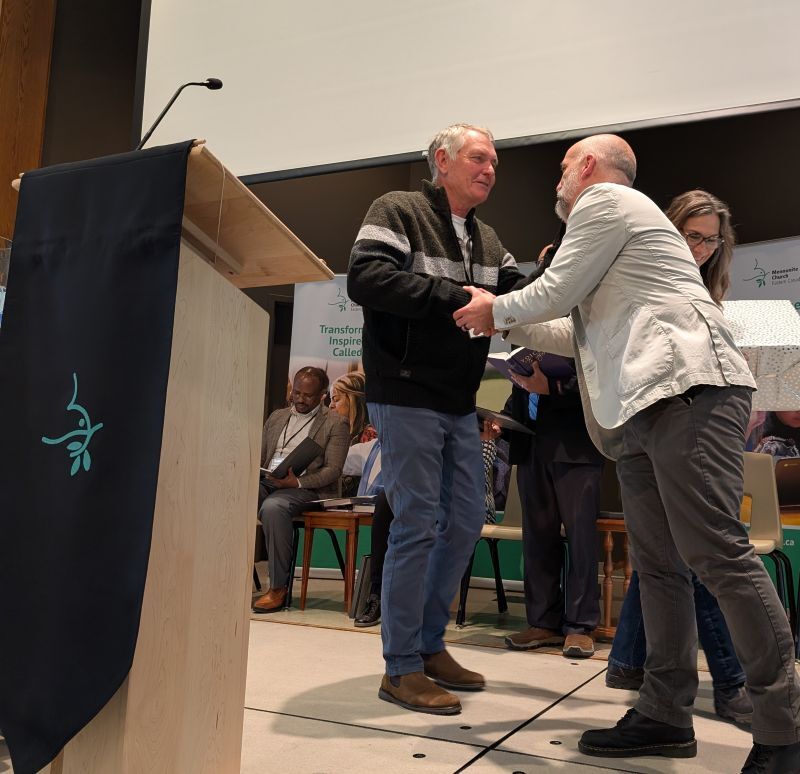
Anthony welcomes Vic from Westview Christian Fellowship into full membership with MCEC.
So then, you are no longer strangers and aliens, but you are fellow citizens with the saints and also members of the household of God, built upon the foundation of the apostles and prophets, with Christ Jesus himself as the cornerstone; in him the whole structure is joined together and grows into a holy temple in the Lord, in whom you also are built together spiritually into a dwelling place for God.
- Ephesians 2:19-22