Renewing Ministry with Young People

In fall a storyteller reminded me that young people are a bit of a paradox for the Mennonite church. On one hand, Anabaptism emerged with the (re)assertion that joining Christ’s body requires mature personal choice. This excludes most youth and all children from membership automatically. On the other hand, as an intergenerational community, the church works to welcome its young people's gifts and offer them loving, guiding companionship. Thus, despite standing outside the church, young people sit at the church’s heart.
How can the church meet young people where they’re at while staying true to its calling?
Today youth and young adults feature in three of the nine “actionable items” taken from MC Canada’s key initiatives survey. Paradox or no, there is clearly energy for revitalizing ministry with younger generations. The energy has been building over decades of cultural shift, complaints about existing approaches to youth ministry, and declining young adult presence. Many grieve the large youth events of the past and worry for the future. How can the church meet young people where they’re at while staying true to its calling?
...leaders have been exploring new ways to welcome young people’s gifts and offer companionship as an intergenerational church.
This question has been animating renewal in congregations around eastern Canada for years. In prayerful discernment, leaders have been exploring new ways to welcome young people’s gifts and offer companionship as an intergenerational church.
When gathering these stories, I was impressed at storytellers’ sincere affection for the young people they serve.
Stewarding oasis at Avon Church
While many of the storytellers I spoke to were involved in creative ministries, most of them emphasized that sophistication and cultural relevance wasn’t their goal. The world is full of stimulating activities – athletics clubs, arts, gaming, social media, shopping – the church will almost never be the most interesting thing in a young person’s life. However, the world has few spaces for loving, attentive relationship, and God commissions the church to be just such a space (Romans 12:9-10).
Avon Church’s youth ministry team grounds everything they do in a strong culture of Christian love. Youth nights are open to any faith or lack thereof, but the guidelines repeated each week lay out a distinct ethos: All questions are welcome; you never have to speak if you don’t want to; this is not a gossiping group; listen when others share – it could change your life. Adult volunteers are expected to be a consistent presence for participants, committing to service for a year at a time. Youth say this environment of mutual faithfulness is an “oasis” for them, a “breath of fresh air” in their week.
Sharing ministries in Waterloo Region 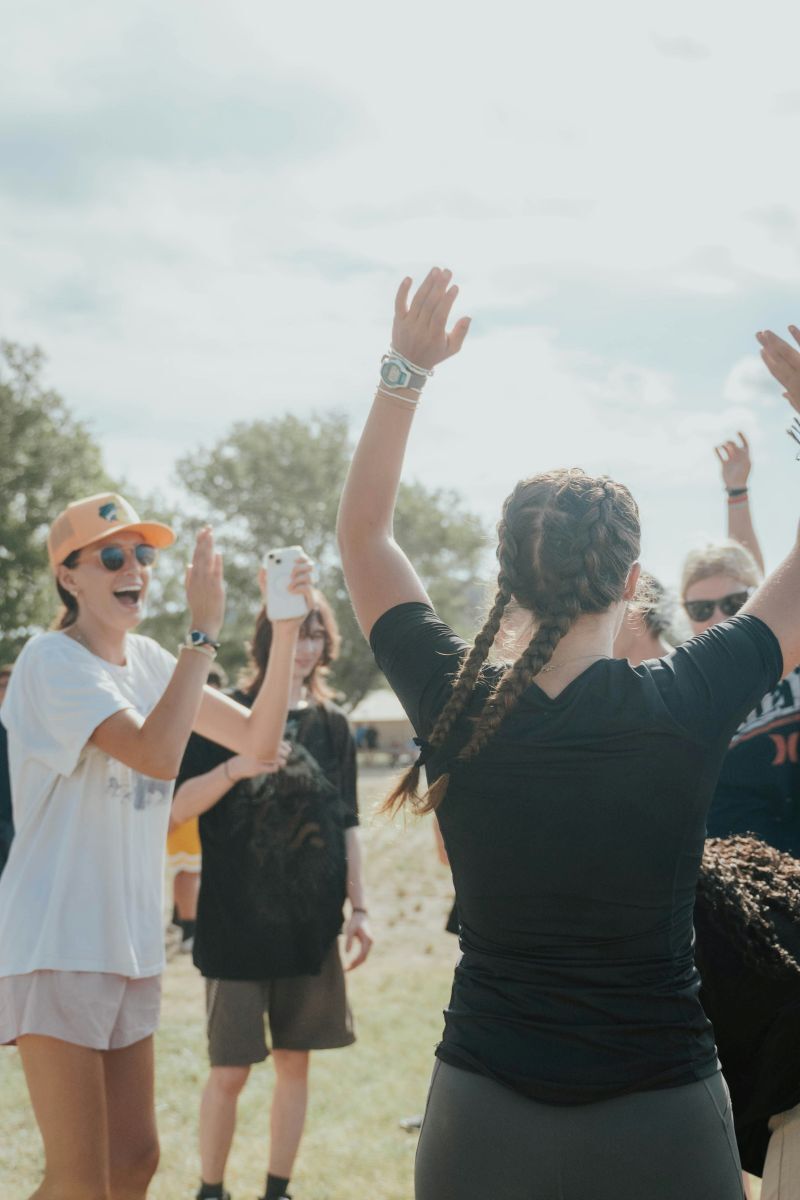
One challenge for ministering with young people is that they tend to go where people their age already are. No matter how caring the pastor or volunteers, it’s difficult to feel part of a fellowship where you don’t have peers. As a result, congregations with a handful of young people readily attract more, while those with only one or two struggle to find momentum.
Bloomingdale Mennonite Church, Elmira MC, Floradale MC, and St. Jacob’s MC noticed this challenge in the aftermath of the COVID pandemic. What can you do for a youth group when you only have a couple of youth? The pastors discussed the problem together, an initial joint gathering emerged, and youth said they wanted more. Over the next few years, the four congregations began co-hosting monthly gatherings, sharing volunteers and spaces between them. The ministry has grown to include a wider age range. Participants who started in junior youth are now taking on leadership roles. As it turns out, these young people had ample peers in the church – they were just attending another congregation.
Youth-led discipleship at Breslau Mennonite Church
The teaching or formational dimension of ministry with young people is another area where congregations have been discerning new approaches. In the 21s century conversations about faith involve less deferring to authority figures and more questioning and dialogue with other Christians. How do we equip young people to explore their own questions about faith as a community?
Breslau Mennonite Church introduced project-based learning in the early 2000s as one answer. After they’ve had the chance to learn Bible stories as children, youth at Breslau choose one topic or question to learn about each year. Sometimes the topic is a broader current issue, like gender. Other times it’s more specific, like seeing whether solar panels or a community garden might work on the church property. Crucially, the learning isn’t just for the youth. At the end of each project the youth group presents their findings to the broader congregation, making the ministry truly intergenerational.
Meals that Matter at St. Jacob’s Mennonite Church
Sunday morning has been a focal point of church life for millennia, but these days it’s not uncommon for youth and young adults to get de-synced from a pattern of weekly attendance. Between hockey practices, work shifts, late Saturday nights, and study periods in other places, it can become difficult to connect with young people every week.
St. Jacob’s Mennonite Church tried a different kind of gathering. It started with a one time post-COVID check-in hosted at a congregant’s house over a Sunday dinner. As time went on, the group continued having “Meals that Matter” every six to eight weeks, each time hosted by a different congregant. Since this was their main point of contact with the congregation, the meals became a place to share life updates, prayer, and even baptismal preparation – a very Acts 2-type expression of church community. Once students began attending university out of town the group went down to one gathering every four to five months, but participants still change work hours and family plans to come to this “sacred trusted space.”
Adapting to early adulthood at Ottawa Mennonite Church
Adapting to early adulthood at Ottawa Mennonite Church
One of the hallmarks of early adulthood is transience. Semesters, work contracts, and rental agreements are short and change can be constant. When you don’t live anywhere for more than a year, regardless of your commitment, long-term connection with a congregation may not be in the picture.

After years of students passing through on co-op and study terms, leaders at Ottawa Mennonite Church decided to seize this pattern as an opportunity for ministry. If our young adults need an affordable and reliable place to rent, why not offer something as a church? The congregation has rented out a student house for over a decade now and continues to be a home away from home for young adults in Ottawa for a season.
I don’t have a list of ways to get involved, but consider praying for wisdom as individual congregations and the nationwide church discern God’s desires for our ministry with young people. I’ve included an example below:
Compassionate and gracious God,
who forms, counsels, and consoles each person from beginning to end,
We thank you for the youth and young adults among us and in the world;
We thank you for their energy, gifts, and perspective;
Each bears your image and is precious in your sight.
In this time of change teach your church anew;
Grant us the wisdom to minister with young people in a manner worthy of your Body,
That all may know you and your love.
In the name of your Son, Jesus Christ, our Lord, Amen.

"As time went on, the group continued having “Meals that Matter” every six to eight weeks, each time hosted by a different congregant. Since this was their main point of contact with the congregation, the meals became a place to share life updates, prayer, and even baptismal preparation – a very Acts 2-type expression of church community."