Priesthood, Peace, and Polyglossia: An Intercultural Becoming
 In this beautiful season of spring, the many forms of life that seemed dormant throughout our long winter are now awakening in vibrant and visible ways. As I witness this renewal, I become more deeply aware of how creation’s beauty and liveliness draw me into greater intimacy with God, the Creator of all things.
I am especially grateful that it is through diversity that the beauty of creation—and the boundless creativity of the Creator—is revealed in ways far beyond what the human mind can fully comprehend or words can adequately express.
In my imagination, I see a bird’s-eye view of our churches spread across the country like that quilt...
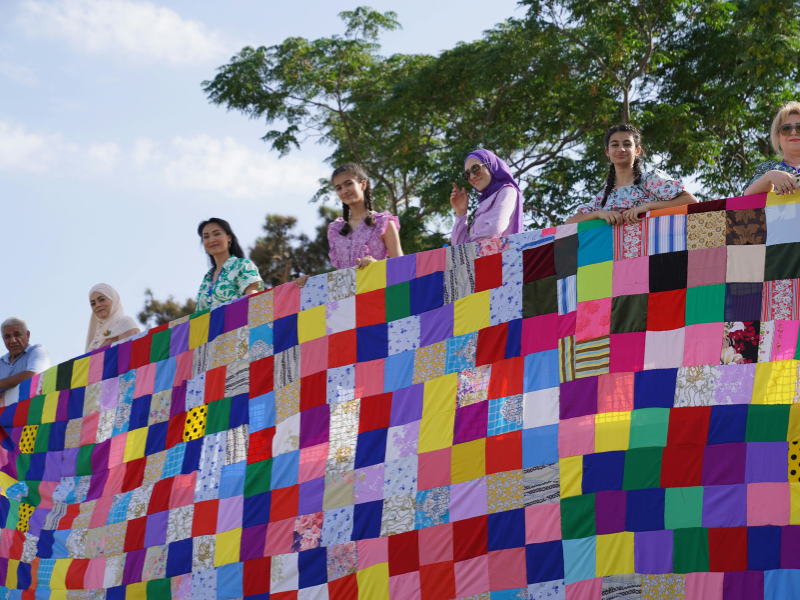
In this spirit of gratitude, I think of the MCEC churches that gather every Sunday to give thanks, lament, pray, and worship in more than twenty different languages. Together, they remind me of a beautiful quilt carefully crafted by gifted hands. Countless hours are spent stitching together pieces of different colours, textures, and patterns until they become one breathtakingly vibrant blanket.
In my imagination, I see a bird’s-eye view of our churches spread across the country like that quilt—diverse people woven together by a single thread: one God, a shared Anabaptist-Mennonite identity, our heavenly citizenship, and our Canadian citizenship.
Though they differ in language, culture, background, and worship style, they all direct their worship to the same God.
From this view, I see some worshipping through movement, loud music, and joyful dancing. Others commune quietly with the Holy Spirit through deeply theological hymns. Still others kneel in awe before the majesty of God, tears flowing down their faces in gratitude and reverence. Though they differ in language, culture, background, and worship style, they all direct their worship to the same God.
This same God declares to these worshipping communities:
“You are a chosen people, a royal priesthood, a holy nation, God’s special possession, that you may declare the praises of him who called you out of darkness into his wonderful light” (1 Peter 2:9, NIV).
God used similar language when speaking to the people of Israel in Exodus 19:5–6. In both passages, being God’s people is inseparable from the calling to represent God’s kingdom of shalom for the sake of God’s glory.
At MCEC, we seek to become a strong intercultural community where the shalom of Christ is our foundation and polyglossia—many languages lifted together in worship—is our shared expression of praise.
In the Old Testament, priests carried the vocation of representing the people before God and representing God before the people. They fulfilled this calling by offering sacrifices on behalf of the community in order to maintain right relationship between God and the people. They also communicated God’s message through teaching, proclamation, admonition, and correction. Once each year, the high priest entered the Holy of Holies to intercede for the people and receive God’s blessing on their behalf.
Today, God’s people continue to carry the identity of being “a chosen people, a royal priesthood, a holy nation, and God’s special possession”—not for privilege or superiority, but to become ambassadors of God’s reconciling love and faithful representatives of the nations before God.
We desire to cultivate a community where diversity is honoured, belonging to Christ and to one another is deeply embraced, and the gifts of people from every nation are welcomed and used for the strengthening of the body of Christ.
We live out this priestly calling through proclaiming the good news of Jesus, teaching, holy living, acts of mercy, and prayers of intercession. Jesus is the great High Priest for all nations. Through him, humanity has access to the Father. Therefore, if we truly embrace God’s declaration about the church, we must also embrace the holy responsibility of carrying before God both the joys and the burdens of the world.
At MCEC, we seek to become a strong intercultural community where the shalom of Christ is our foundation and polyglossia—many languages lifted together in worship—is our shared expression of praise. We desire to cultivate a community where diversity is honoured, belonging to Christ and to one another is deeply embraced, and the gifts of people from every nation are welcomed and used for the strengthening of the body of Christ.
I believe God is calling us to put our peace theology into practice as our MCEC churches—and our country—become increasingly diverse.
We cannot imagine living out the priesthood of all believers without pursuing peace and embracing worshippers from many nations as our spiritual siblings. To be a people of shalom and polyglossia is not merely a choice we make; it is a God-given identity we are called to embody faithfully together.
I believe God is calling us to put our peace theology into practice as our MCEC churches—and our country—become increasingly diverse. Linguistic, cultural, economic, and social barriers make this calling both urgent and necessary.
Shalom means living in right relationship with God, with one another, and with creation. It is a vision of wholeness, reconciliation, justice, and flourishing for all people.
Our biblical and Anabaptist understanding of shalom goes far beyond simply opposing military solutions to the world’s problems. Shalom means living in right relationship with God, with one another, and with creation. It is a vision of wholeness, reconciliation, justice, and flourishing for all people.
To be a people of shalom, we must move from belief to action. This requires intentional collaboration across our churches and the faithful use of every gift God has entrusted to us. We are called to build intercultural communities that reflect Christ’s love, embody Christlike character, and nurture the holistic wellbeing of every person.
Now is the time for our churches to actively practice Christ-centred peacebuilding: listening deeply, crossing barriers, sharing leadership, and working together so that our communities become visible expressions of God’s peace in a divided world.
"In this spirit of gratitude, I think of the MCEC churches that gather every Sunday to give thanks, lament, pray, and worship in more than twenty different languages. Together, they remind me of a beautiful quilt carefully crafted by gifted hands. Countless hours are spent stitching together pieces of different colours, textures, and patterns until they become one breathtakingly vibrant blanket.
In my imagination, I see a bird’s-eye view of our churches spread across the country like that quilt—diverse people woven together by a single thread: one God, a shared Anabaptist-Mennonite identity, our heavenly citizenship, and our Canadian citizenship."