Release Date: September 9th, 2026From Obedience to Spiritual Maturity
- by Kevin Peters Unrau
“Rules are for when we lack the wisdom and experience to know what to do.”
 I both appreciate and am challenged by this quotation. Rules are helpful because they save us from constantly discerning and negotiating every aspect of our lives. Can you imagine trying to drive without the basic rule that tells us on which side of the road to drive? It would be chaos! But wisdom and experience can show us when we should break this rule.
Spiritual maturity describes the effect of accumulated wisdom and experience on our lives.
How many of us have swerved onto the “wrong” side of the road to get around a parked delivery vehicle, avoid an accident, or save a child who has run into the road? Blindly following the rule is no substitute for the wisdom and experience we all rely on to make driving safe and functional.
Spiritual maturity is effortful… much harder work than simple obedience.
Spiritual maturity describes the effect of accumulated wisdom and experience on our lives. When my children were toddlers we had all kinds of rules: Don’t hit, don’t lie, don’t touch things that aren’t yours, stay on our side of the street to play. But by age five or six we didn’t have those rules in our household anymore because they had learned to be kind, truthful, respectful, and to pay attention to the world around them. They had developed enough maturity to not need those rules anymore. They had not abandoned these rules, they had surpassed them. To paraphrase the words of Jesus, maturity fulfilled the rules it did not abolish them.
However, this sounds simple while life is often more complex. Consider the following proverbs:
Don’t answer the foolish arguments of fools,
or you will become as foolish as they are.
Be sure to answer the foolish arguments of fools,
or they will become wise in their own estimation.
One simply cannot be obedient to both of these contradictory commands. With wisdom and experience though we don’t see contradiction, we see two truths both of which need fulfilling, each in their own time. Wisdom and experience guide us to follow the right one for the circumstances.
There is no answer key at the end of the Bible against which we can “check our work.”
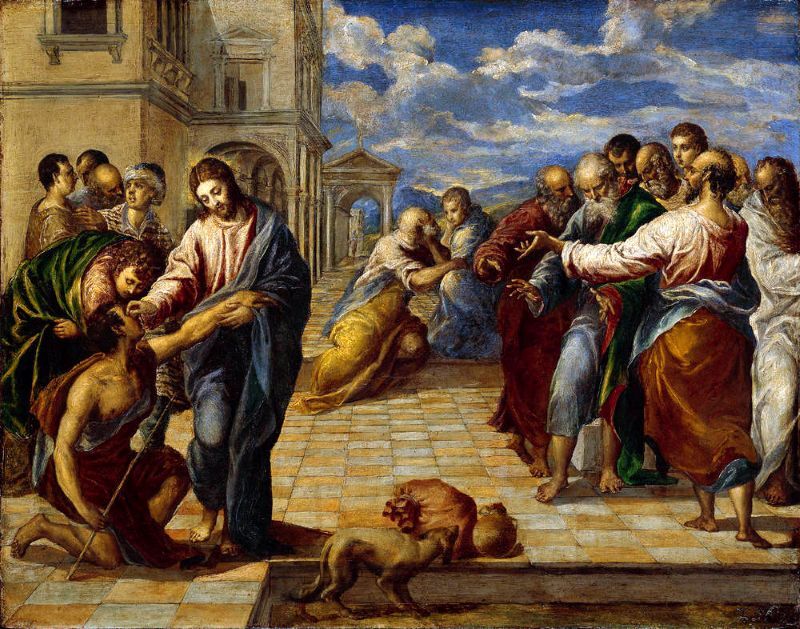
It was Jesus’ ability to know which commandments to follow or not follow in any given situation that put him in conflict with religious leaders who hadn’t grown beyond blind obedience. It was his spiritual maturity that allowed him to remain faithful even in conflicted circumstances – like healing the sick or picking grain on the Sabbath – when he acted in violation of specific religious laws in order to fulfill God’s will.
Spiritual maturity requires us to grow ourselves up, pay attention to the world around us, and respond to what God is doing in the world and in our lives.
This is the challenge of living from a posture of spiritual maturity rather than simple obedience. When the rules are clear it is easy to tell when one is doing things right or wrong. If we get things right we get to give ourselves a checkmark, hoorah!. But spiritual maturity offers no such certainty. There is no answer key at the end of the Bible against which we can “check our work.”
Spiritual maturity is effortful… much harder work than simple obedience. But obedience alone is insufficient for coping with the complexity of the world in which we live. Spiritual maturity requires us to grow ourselves up, pay attention to the world around us, and respond to what God is doing in the world and in our lives. It may lack the simplicity and certainty of obedience, but a life lived in pursuit of spiritual maturity offers meaning and challenge, is more resilient in times of change, and shapes us ever more into the image of Jesus whom we follow.
- Kevin Peters Unrau is pastor at Hillcrest Mennonite Church